
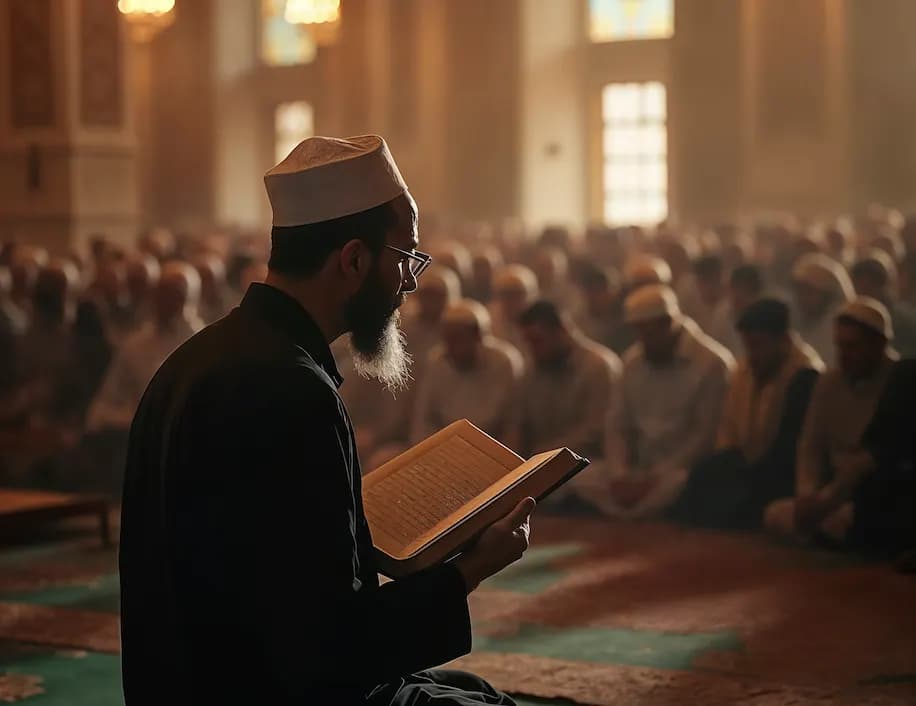
Children absorb the rhythm of the home. Simple, consistent family routines do more to build lasting Islamic habits than occasional lectures.
Key Takeaways
- Children internalise what is woven into the home's rhythm.
- Praying together builds the most important habit early.
- A short daily Quran time and everyday du'as embed the deen.
- A weekly family learning session creates shared momentum.
- Consistent small routines beat occasional lectures.
Children learn the deen less from what they're told and more from the rhythm they live in. A home where worship and remembrance are woven into daily routines raises children for whom Islam is simply part of life — not a separate subject.
Routines that work
- Praying together as a family.
- A short daily Quran time, however small.
- Du'as tied to eating, sleeping and leaving the house.
- A weekly family learning session.
- Bedtime stories of the Prophets and companions.
Frequently Asked Questions
What family routines help children build Islamic habits?+
Praying together, a short daily Quran time, du'as tied to daily activities (eating, sleeping, travelling), a weekly family learning session, and bedtime stories of the Prophets. Routines woven into daily life shape habits far more than occasional reminders.
How do I make worship a habit for my kids?+
Make it a shared family rhythm rather than an individual demand — pray together, learn together, and tie du'as to everyday moments. When the whole home moves to the rhythm of the deen, children absorb it naturally.
What if we're inconsistent?+
Start with one small routine (even a single daily du'a together) and build from there. Consistency in one habit beats ambitious plans that collapse. The rhythm grows over time.
Islamic Education Editorial Team
Reviewed by verified teachers (Quran, Arabic and Islamic studies) on the Talib Alillm platform.